
Marijuana Production
Optimal humidity for healthy yields
Booming Business
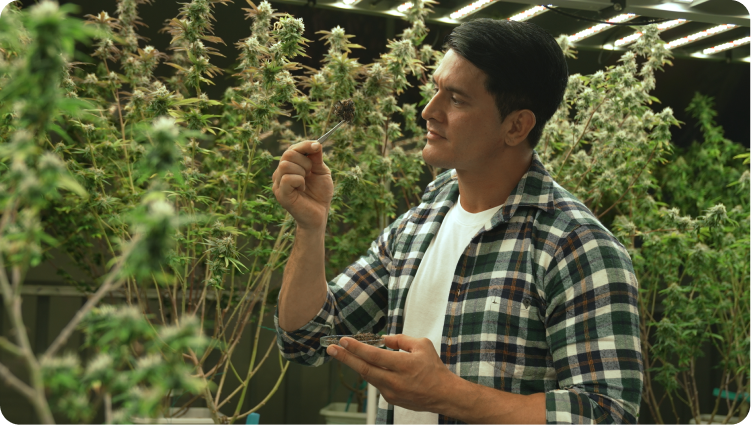
As more U.S. states and countries like Canada legalize recreational marijuana, the industry is expanding rapidly. While there are several ways to grow marijuana, indoor grow rooms are often considered the most efficient, though their high energy use has led some growers to explore greenhouses or hybrid setups. Key parameters such as water temperature, nutrients, humidity, air quality, CO₂ levels, and lighting are now well-documented. This article focuses on proper humidity control and the optimal Relative Humidity (RH%) levels for each stage of plant growth.
Why is humidity control important for marijuana growing?
Humidity is one of the most critical air-quality factors in cannabis cultivation, yet it’s often poorly managed. Too much humidity promotes mold that can ruin entire crops, while too little stresses plants and can lead to die-off.
- Nutrient absorption: humidity levels influence how much water marijuana plants absorb which influences the amount of nutrients it absorbs. A low humidity level causes plants to drink more resulting in “nutrient burn”, which gives the leaves a yellow or burnt colour.
- Altered growth: marijuana plants in early stages need a higher humidity level whereas more mature plants prefer lower humidity levels. Moisture is one of the factors that controls the opening and closing of the stomata. Dry air causes the stomata to close to limit the loss of water.
What Humidity level for which growing stages?
| Stage | Cloning | Seedling | Vegetative Growth | Flowering |
|---|---|---|---|---|
| RH% | 70-80% | 65-70% | 40-70% | 30-50% |
| Stage | RH% |
| Cloning | 65-70% |
| Seedling | 70-80% |
| Vegetative Growth | 40-70% |
| Flowering | 30-50% |

Drying
While the marijuana is drying, a relative humidity of 50 per cent should be maintained. This stops the plant from drying out too quickly, because the water leaves the cannabis slowly.

Lights On and Off
During the Light-On period, humidity levels should be as per set point (indicated in the above table). As soon as the lights are turned off, the plants will release moisture into the air, the RH% level in the air must be reduced and HVAC systems should respond with de-humidification mode.

Vegetative growth
Humidity levels can be reduced by 5% per week (acceptable range: 40-70%). Now the roots absorb more water, and the evaporation by the leaves refreshes the plants, so moisture content in the air can be reduced.

Flowering
Humidity levels should be lowered to between 40 and 50%, as flowers can be affected by high humidity level typically above 55% RH. Each grower will have their own recipe at this stage since moisture content in the air will affect appearance and flavor of the crop.

Young Sprout
Seedlings and clones like a high humidity levels of 65-80%. Because the root system is not developed, high humidity allows the absorption of water through the leaves.
Greenhouse versus indoor grow room
Indoor facilities
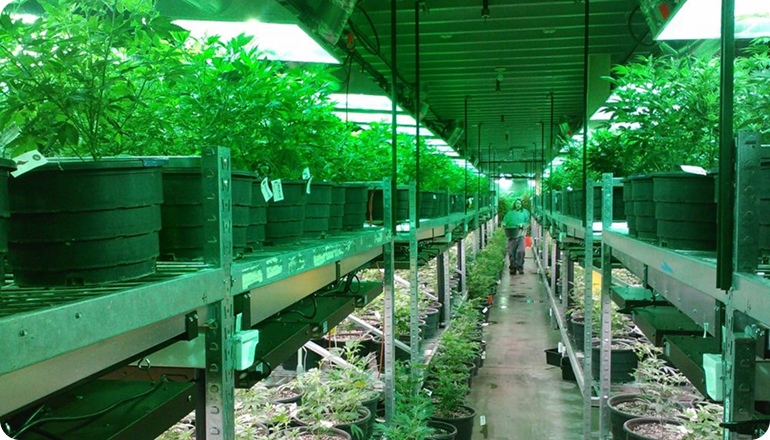
- Indoor grow rooms allow precise control of temperature, humidity, CO₂ levels, and lighting, helping ensure consistent, high-quality crops.
- These facilities are extremely energy-intensive, using 10–20× more energy than a typical office building.
- Some experts estimate energy use at up to 2,000 kWh per pound of cannabis produced.
- To reduce costs and environmental impact, growers are increasingly experimenting with greenhouses or hybrid greenhouse–indoor systems.
Greenhouse
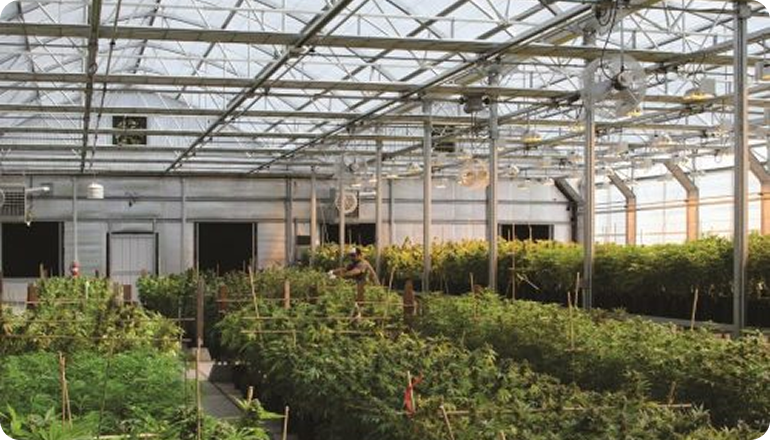
- Greenhouses reduce reliance on artificial lighting and power while producing a more natural crop.
- Light deprivation is managed by blocking sunlight with partial or full shading.
- Effectiveness depends heavily on geographical location and local climate.
- Greenhouse operations are often seasonal, aligning plant growth with the most favorable natural conditions.
Key Benefits
- Optimize plant growth
- Prevent heat stress
- Increase yield and consistency
- Match humidity to each growth stage
- Improve final crop quality
- steamOvap’s technical team has supported growers of all sizes, helping design efficient HVAC systems and correcting issues like oversized equipment and unnecessary energy losses.
Isothermal solution (IER model)
- Produces clean, sterile steam
- Highly precise output (±1% RH)
- Can adjust humidity based on lighting cycles and plant growth stages
Adiabatic solutions
- AEM evaporative system
- ACA dry-fog atomizer
- Both use very low power and help reduce cooling loads